
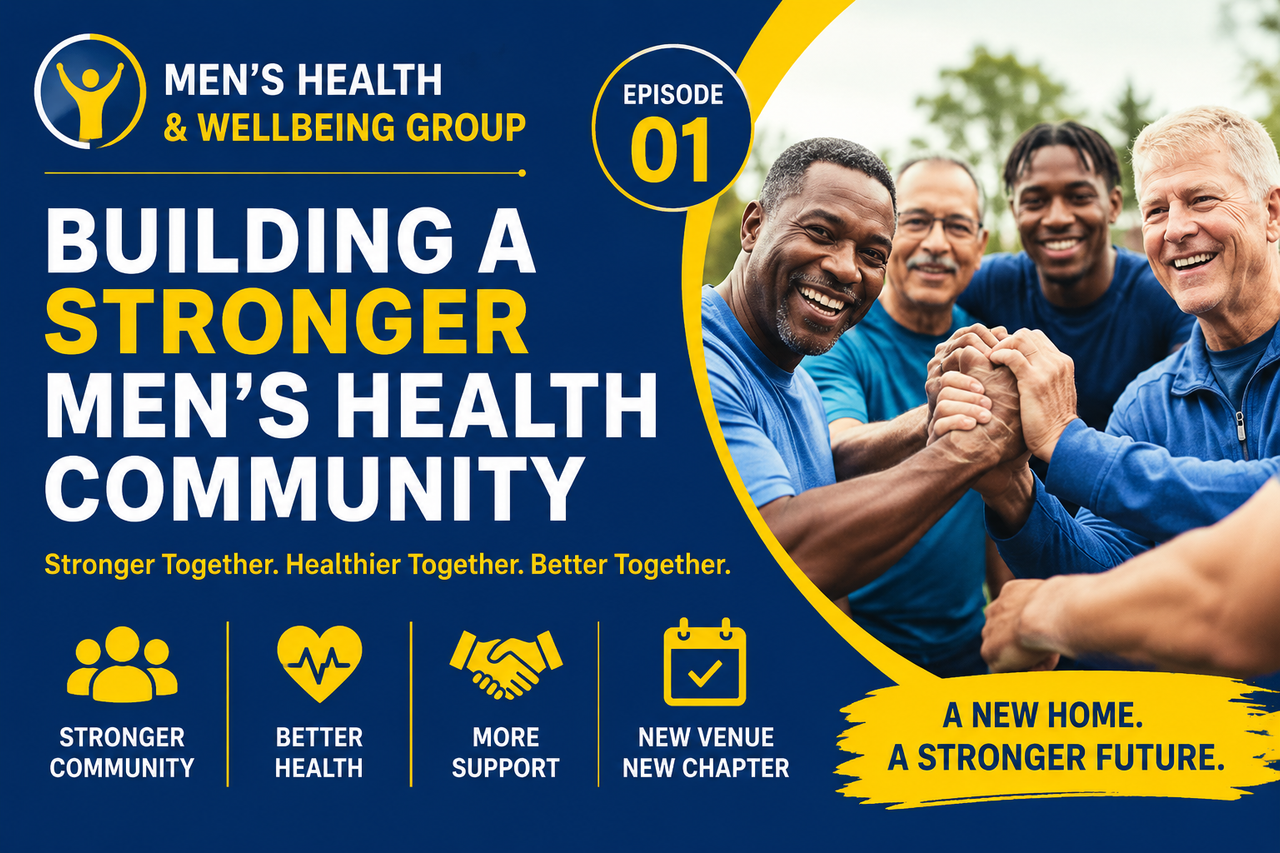
Building a Stronger Men’s Health Community: Safe Spaces, Prostate Support and Planning Ahead
Published on July 14, 2026
Building a Stronger Men’s Health Community: Safe Spaces, Prostate Support and Planning Ahead
Men’s health is not only about what happens in the doctor’s surgery. It is about whether we talk when something is wrong, whether we know where to get support, whether we make time for our wellbeing, and whether we put the right plans in place for the people we love.
That is the purpose of this group. We are creating a place where men can come together, speak plainly, learn from each other and deal with the real issues. Prostate cancer, diabetes, mental wellbeing, relationships, addictions, wills, care costs and family responsibilities all belong in the conversation.
A New Meeting Day and a New Home at Alexander Stadium
First, we are making things simpler. Our monthly meeting will now take place on the last Tuesday of every month. No more trying to remember whether it is the third Wednesday, fourth Tuesday or something else. The last Tuesday is straightforward.
We are also moving our regular meetings to Alexander Stadium. After three years of managing with limited facilities, back-door access, unreliable heating and practical issues with equipment and rooms, it is time to move forward.
Alexander Stadium gives us a proper setting, with meeting rooms, health and wellbeing facilities, a busy gym environment and better opportunities to welcome more men. It is a venue that feels like progress. It also puts us in a space where health, fitness and community are already happening every day.
The existing venue may still be useful for one-to-one counselling, mental health support and administrative work, but our main monthly gathering is moving on.
Birmingham’s Prostate Cancer Support Group Is Growing
One of the strongest developments has been the growth of a Birmingham prostate cancer support group. When a diagnosis comes, the first instinct for many people is to search online for help. Yet it was difficult to find a clearly visible Birmingham-based prostate support group, with most available options located outside the city.
That gap needed filling.
The first dedicated meeting took place in March, with a small group attending. By the following month, around 50 people came through the door. That tells us something important: men do want to talk when there is a clear reason, a welcoming format and people who understand what they are going through.
The group works because it is not just a room full of people being spoken at. Tables are set up in smaller groups, allowing people to talk among themselves first. Questions can be written down rather than asked publicly. That takes pressure off men who may be nervous, newly diagnosed or unsure how to put their concerns into words.
Access to informed professionals matters too. Having a urology nurse present gave men the chance to ask medical questions directly, openly and without embarrassment. Representation mattered as well. For some men, seeing a Black health professional in the room created an immediate sense of trust and recognition.
Black Men Are Talking More About Prostate Cancer
There is a common belief that Black men do not talk about their health. The reality is more complicated. Many men have been carrying concerns quietly for years, but community groups are beginning to bring those conversations into the open.
Men are coming forward who had not previously disclosed that they had prostate cancer. They are asking questions they may never have asked a doctor, friend or family member. They are hearing the experiences of other men and realising that they are not alone.
That does not mean everyone will speak the same way. Some men come just to listen. Some may be ready to share immediately. Others need time. A successful support group makes room for every one of those approaches.
Prostate cancer brings particular anxieties. Men may fear examinations, worry about treatment, or feel concerned about sexual function and erectile dysfunction. The discussion made clear that treatment outcomes vary from person to person. Different treatments affect men differently, and the figures are not as simple as throwing out one percentage for everyone.
What matters is that men can ask direct questions, hear honest answers and understand that help is available. Fear grows in silence. Knowledge gives people choices.
Do Women Belong in Men’s Health Conversations?
This was one of the liveliest discussions of the evening, and it is a question worth taking seriously.
One view is that a men’s health group must protect a men-only space. Men need somewhere they can discuss private concerns, including sexual health, mental wellbeing, relationships and personal struggles, without feeling exposed or judged. For some men, a room of peers makes honest conversation easier.
Another view is that partners, wives, daughters and other women are often central to a man’s health journey. They may encourage a man to seek help, attend appointments, provide care during treatment and carry responsibilities when illness affects the family. From that perspective, excluding women completely may leave out people who need information too.
Both positions have merit. The key point is that different spaces can serve different purposes.
A prostate cancer support group may include partners and family members because cancer affects the whole household. A men’s-only health session can give men the privacy to discuss sensitive issues in their own way. Mixed sessions can be valuable for subjects such as financial planning, wills, family care, housing and relationship wellbeing.
This is not about being against women. It is about being clear about the purpose of each meeting. Women have been welcomed for particular subjects where couples and families need to understand the issues together. At the same time, men should not lose the opportunity to speak freely among men when that is what they need.
What Makes a Men’s Health Group Work?
Attendance numbers matter, but they do not tell the whole story.
Yes, it can be frustrating when a major community event draws a large crowd but only a handful of men attend a regular monthly meeting. Yes, a better venue and clearer outreach may help. Yes, we need to think carefully about who we are trying to reach, where those men are and what subjects will bring them through the door.
But the value of a group cannot be measured only by whether the room is packed.
A small group can still be life changing. If one man hears information that helps him act on a health concern, that meeting has mattered. If someone who has been avoiding treatment finally goes back to the doctor because of a conversation in the room, that has mattered. If a man learns something that helps him support his partner, children or friends, that has mattered too.
One powerful example involved a man with very high PSA results who had not taken the next step with treatment. Through conversation and support, he connected with someone who helped him engage with the medical process. That is exactly why these spaces matter. A simple conversation can move someone from fear and avoidance towards action.
Safe Spaces Do Not Mean Easy Conversations
Men’s health conversations can be blunt, personal and uncomfortable. That is often where the value is.
There have been discussions about prostate cancer treatment, pumps used to support blood flow after surgery, sexual function, gambling, addiction, diabetes, mental wellbeing and the practical worries that men may keep to themselves. These are not small matters. They are the things that affect how men live day to day.
At first, men may need encouragement to speak. Over time, trust grows. The dialogue becomes more open, more informed and more honest. Men who would not normally raise these subjects elsewhere begin to share experiences and ask the questions that have been troubling them.
A safe space is not about pretending every issue is comfortable. It is about knowing that you can speak without being laughed at, dismissed or made to feel less of a man.
Keep the Programme Fresh and Relevant
A men’s health group needs variety. Prostate cancer is a major concern, but it is not the only concern. Men also need practical information that helps them manage life, family and finances.
Some of the most valuable past sessions have covered subjects people may not have expected, including:
Gambling and addiction Diabetes and chronic health conditions Mental wellbeing Prostate cancer treatment options Erectile dysfunction and continence support after treatment Wills, trusts and estate planning Care costs and family responsibilities
The conversation around wills was especially powerful because it led men to take action rather than keep postponing it. That is the difference between hearing information and using it.
If there are topics men want covered, bring them forward. There is a wealth of experience within the community, and there are professionals who can come in and explain specialist areas clearly.
A Community Bike Ride for Older Men
Health and wellbeing is not all meetings and serious discussions. We also need movement, friendship and activities that get people out of the house.
A pensioners’ bike ride is being planned from Perry Barr, using an easy canal route. The proposed dates are 24 May or 31 May, depending on interest. The aim is not a hard mountain-bike challenge. It is a light, social ride that encourages older men to get on a bicycle, enjoy the journey and connect with each other.
For those without a bicycle, there may be options to borrow one through local cycling groups. There is also potential to connect with established bike-riding hubs and organise future rides for different ability levels, from light routes to more demanding outings.
Sometimes a bike ride is just a bike ride. Sometimes it is the first step back into activity, confidence and community.
Why Every Adult Needs a Proper Will
Health and wellbeing also includes preparing for what happens if illness, incapacity or death comes sooner than expected. It is not pleasant to think about, but avoiding the subject does not protect anybody.
One of the clearest messages from the discussion was this: get a proper will in place.
Too many families assume that everything will somehow work itself out. But if arrangements are unclear, loved ones can face stress, delays, costs and disputes at an already difficult time. A will should be prepared properly by someone qualified to do it, not treated as a bit of paperwork to deal with later.
People who had attended an earlier session on wills and housing said it pushed them to act. They had been putting it off, but realised that delay was not helping anyone.
Planning ahead is an act of care. It is one way of protecting your partner, children and the people who depend on you.
Family Trusts and Protecting Your Home
The group also discussed family trusts. A trust can be part of wider estate planning, particularly for people concerned about protecting a home, reducing future disputes and ensuring that assets pass according to their wishes.
The discussion highlighted several reasons people consider putting a property into trust:
Creating clearer arrangements around who can benefit from the property. Helping protect assets for children and other intended beneficiaries. Reducing the risk of family disputes over ownership. Providing structure if a relationship breaks down or circumstances change. Planning ahead for potential care needs and future financial pressures.
Some members described setting up trusts with themselves, their spouse and their children as trustees. They understood that arrangements could be changed if circumstances changed, including decisions to sell a property or alter trustees.
However, this is an area where people need to be careful. Trusts, inheritance tax, care funding and property ownership are complicated legal and financial matters. The exact outcome depends on personal circumstances, how and when a trust is created, the terms of the trust, available assets, income and current law.
Do not rely on general conversation alone when making these decisions. Speak to a properly qualified solicitor, estate planner or financial professional who can explain the costs, responsibilities and legal consequences in your own situation.
The main message remains solid: the wealthy have long used professional advice and legal structures to plan their affairs. Ordinary families deserve access to that knowledge too.
Care Costs Can Change Everything
Residential care can be extremely expensive, with figures discussed in the region of £1,000 to £1,500 a week. Over time, those costs can become a serious concern for families, particularly where a person owns a property or has savings.
The conversation was not about avoiding responsibility for care. It was about understanding the system before a crisis arrives. People need to know what assets they have, what documents are in place and who has authority to make decisions if they can no longer do so themselves.
It is always better to prepare while you are well and able to make your own choices.
Lasting Power of Attorney Is Essential Planning
Alongside a will, one of the most important documents to consider is a Lasting Power of Attorney, often called an LPA.
An LPA allows someone you trust to make decisions on your behalf if you lose the mental capacity to make them yourself. There are separate arrangements for:
Health and welfare decisions, including care and medical choices. Property and financial affairs, including bank accounts, bills and other financial responsibilities.
Without the right authority in place, families can find themselves unable to access accounts, manage bills or make decisions for a loved one. The system can take over, and family members may have far less control than they expected.
This is not something to leave until after a diagnosis, accident or sudden decline. If capacity has already been lost, it may be too late to put an LPA in place in the usual way.
Choosing an attorney is a serious decision. It should be someone trustworthy, capable and willing to act in your best interests. Families should also communicate clearly, particularly where several children or relatives are involved. Unspoken assumptions around money, property and care can quickly become arguments when there is no clear plan.
Family Care Needs Honest Conversations
Care responsibilities are not shared equally in every family. Sometimes one person does most of the work, taking a parent to appointments, helping with day-to-day needs and carrying the emotional load for years.
That can create tension when financial decisions arise later. Other relatives may want an equal share of everything, while the person who provided the care may feel unrecognised. There is no simple answer, but avoiding the conversation makes it worse.
Family meetings can help where people are willing to be honest. Talk about the role each person plays, what support is needed, what the parent wants and how future arrangements should work. It may not solve every disagreement, but it gives people a chance to deal with matters openly rather than wait for conflict.
At the same time, every family has its own history. It is easy to say that everyone should care for their mother or father, but life is not always that straightforward. Some people carry deep hurt because of abuse, neglect or difficult childhood experiences. We should not judge every family by one standard when we do not know what someone has lived through.
When Men Start Talking, Lives Can Change
The whole point of this work is not to create another group where people sit quietly and go home. It is to create a community where men share information, challenge each other, support each other and take action.
We cannot force men to attend. You can take a horse to water, but you cannot make it drink. But we can make sure that the door is open, the topics are real and the environment is welcoming when a man is ready.
Come because you want to learn. Come because you have something to share. Come because someone else may need to hear your experience. Whether there are five people in the room or 50, the conversation can make a difference.
Health is not just your blood pressure, your PSA number or your sugar level. It is your mental wellbeing, your relationships, your finances, your home, your future care and the protection of your family.
When men start talking, lives can change.