
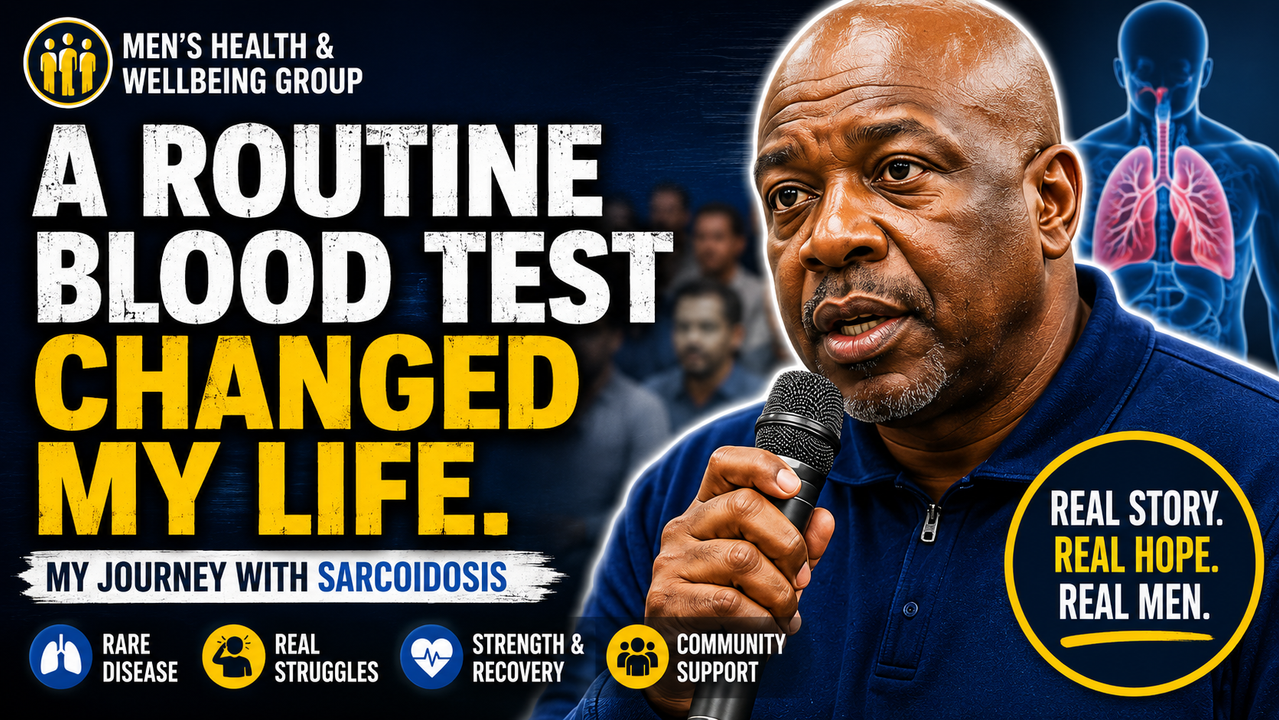
A Routine Blood Test Changed My Life: Real Stories of Illness, Recovery and Community
Published on July 14, 2026
A Routine Blood Test Changed My Life: Real Stories of Illness, Recovery and Community
Most of us carry worries that never come to pass. But when a health problem does arrive, it can turn your whole world upside down. That is why we have to talk, check in on one another, take responsibility for our health where we can, and stop suffering in silence.
Health is not only about a diagnosis or a prescription. It is about how you cope when your body changes, how you protect your mental wellbeing, what support you have around you, and whether you are still connected to people.
A Little Known Condition Called Sarcoidosis
Sarcoidosis is a condition that many people have never even heard of until it affects them or someone close to them. It is a rare inflammatory disease that can affect different parts of the body, including the lungs, eyes, skin and joints. It can leave someone with severe fatigue, weight loss, pain, weakness and a major loss of mobility.
One member of the group was diagnosed in 2017. Before that, he was active, worked as a storesman for the NHS, coached football and was used to moving and lifting without a problem. Then his health changed rapidly.
Within a matter of months, he had lost a huge amount of weight and had so little strength that ordinary daily tasks became difficult. He could no longer lift a five-kilo box at work. He could not get himself out of a car seat. Even kicking a football a short distance became impossible.
That loss of strength was not simply tiredness after a busy day. His body was telling him that something serious was going on.
The Routine Blood Test That Raised the Alarm
The diagnosis began with what seemed like a routine blood test through his GP. He was sent to hospital, returned home, and then received a call asking him to come back the next morning for further testing.
When he arrived, specialists were waiting to speak with him. The first possibilities mentioned included cancer and other serious conditions. Naturally, that created fear and stress. Anyone hearing that kind of news would have questions racing through their mind.
Eventually, the diagnosis came back as sarcoidosis. The first instinct was to search online, but that can be frightening when the first results are serious stories and there is no simple cure to be found.
There is still much that people do not understand about sarcoidosis, including why it develops in some people. It is not limited to one ethnic group, and it is not something that only runs in families. It can affect adults at different stages of life.
When Your Whole Body Feels Different
Living with sarcoidosis meant dealing with symptoms that were visible and invisible. There was severe fatigue, weakness, weight loss, joint pain and skin changes. The pain in the knees and ankles could feel as though somebody was constantly squeezing the joints.
Skin marks and blotches can also appear. The condition may affect the eyes, lungs, joints and other areas of the body, which is why it is important not to brush off major changes in your appearance, energy levels or physical ability.
One of the difficult things about a rare condition is that not every professional immediately recognises it. In this case, a local clinician spotted that something was wrong and arranged the hospital referral that led to the diagnosis.
If somebody is suddenly losing weight, looking unwell, struggling with fatigue, developing unusual marks on their skin or losing strength, do not make assumptions. Ask how they are. Encourage them to seek proper medical advice. Sometimes a person needs practical help, and sometimes they simply need somebody to talk to.
Medication, Steroids and the Reality of Treatment
Treatment involved steroids and other medications. At one point, the number of tablets being taken each day was overwhelming. Medication can be necessary and lifesaving, but it can also bring side effects, especially when a person is taking several different treatments at once.
There was a time when the medication was stopped because it felt like too much. That decision led quickly to hospital admission. Inflammatory markers that should have been within a much lower range had risen dramatically. The condition had become dangerous, requiring weeks in hospital and treatment throughout the day and night.
That experience is a reminder that medication should never be stopped or changed without speaking to the medical team responsible for your care. It may be frustrating, exhausting and difficult, but serious conditions need proper monitoring.
There was also a deeply personal moment of facing mortality. During the worst period of illness, it felt as though the end might be near. Faith, inner strength and determination helped him keep going. He came through it, but the experience left a lasting message: do not take your health for granted.
Hydrotherapy, Recovery and Finding a Way Back
Recovery did not happen overnight. Hydrotherapy became an important part of rebuilding movement and strength. Being able to exercise in water provided a route back towards walking and functioning again.
At one stage, a walking stick was needed. That was hard for someone who had always been active. Sadly, not everybody understands invisible illnesses. A person may look well dressed, may be standing upright, may even be smiling, and still be in serious pain or struggling with a long-term condition.
That is why we need more compassion. Do not mock what you do not understand. Do not assume a walking aid is a fashion accessory. You never know what somebody has had to fight through just to get out of the house.
Isolation Can Be Part of the Illness
After becoming unwell, there was a period of more than a year spent hiding away from people. No outings. No social life. No desire to be seen while the body had changed so much.
That is one of the hidden impacts of long-term illness. The physical symptoms are only part of it. People can lose confidence, feel embarrassed, become anxious or fall into isolation. For men especially, it can be hard to admit that things are not right.
But keeping everything inside does not make it better. Talk to somebody. Speak to family, friends, a health professional, a support group or someone who has been through something similar. Having people around you can make a real difference.
Natural Remedies and Conventional Medicine: Use Wisdom, Not Guesswork
Part of the recovery journey involved exploring traditional and natural remedies, alongside changes in lifestyle. A remedy shared through family helped him feel stronger and more able to get back on his feet during a difficult period.
At the same time, this is an area where we all need to be careful. Natural or alternative treatments may have a place for some people, but they are not a replacement for proper medical assessment, especially where cancer, inflammatory disease or other serious conditions are concerned.
There were important voices in the discussion from people who had seen loved ones try alternative treatments after conventional treatment, only for their illness to progress. The point is not to dismiss every natural approach. The point is to do your own due diligence, speak honestly with qualified healthcare professionals and avoid being persuaded by miracle claims.
If somebody had a guaranteed cure for cancer or another serious condition, they would not need to sell it through word of mouth. Be cautious. Ask questions. Understand what you are taking, how it may interact with other medicines and whether it is appropriate for your particular stage of illness.
The Everyday Foundations of Better Health
Some parts of health and wellbeing are not rocket science. They are simple, but they need consistency.
Nutrition: Pay attention to what you are eating and how food affects your body. Movement: Exercise does not have to mean running marathons or lifting massive weights. A walk, chair-based exercise, hydrotherapy or gentle activity can all be worthwhile. Water: Staying hydrated is a basic but important part of looking after yourself. Sleep: Sleep deprivation can have a serious impact on mental health, mood and wellbeing. Lifestyle: Alcohol, drugs and other habits can affect the body and mind. The message is not about judging anybody. It is about moderation and making choices that support your health. Research: Learn about your condition and ask questions. People living with an illness often gain a deep understanding through lived experience.
Taking responsibility does not mean blaming yourself for becoming ill. It means recognising that, where we have choices, we should use them to give ourselves the best chance of living well.
From Breast Cancer Recovery to Building a Community Group
Another powerful story came from a retired occupational therapist who was diagnosed with stage three breast cancer after going to her GP with a cough. Her sister had previously been diagnosed with cancer, which helped prompt swift action. Within a short period, an X-ray led to the diagnosis.
Having worked in the NHS for 25 years, she had spent her career helping people regain independence. She supported people with exercise programmes, rehabilitation, discharge planning and the everyday skills needed to return home after illness.
Before her cancer diagnosis, arthritis had already forced her to retire from occupational therapy on health grounds. Then cancer treatment brought another enormous challenge. Chemotherapy and radiotherapy left her extremely weak, and she spent around a year largely confined to bed while receiving treatment.
When she finally began getting back on her feet, she knew she needed exercise. Yet the options available did not suit her needs. With her professional background, she understood what a useful rehabilitation programme could look like, so she decided to create one herself.
A Group Built on Perseverance
The community exercise group began with just four people: herself, her mother, her sister and her daughter. She hired a hall at Stockland Green Church, paid for the space and equipment herself, planned the exercise sessions and provided lunch.
The group now has a list of around 35 to 40 people. It runs every other Wednesday from 10:30am until 1pm, offering a welcoming space for people living with cancer, disability, reduced mobility, loneliness or a need for more activity.
Funding did not come immediately. The group began in 2023, and it took perseverance, regular attendance and a committed community before funding was secured. That is an important lesson for anybody trying to build something positive: keep showing up, keep working and let people see the value of what you are doing.
The group is not just for people who have had cancer. Some members have mobility issues, some are recovering from illness, some have been advised to become more active, and some simply need to get out of the house and be around other people.
Exercise That Supports Everyday Life
The sessions are designed around activities of daily living. That means focusing on the movements people need for ordinary life, such as going up and down stairs, reaching into kitchen cupboards, improving hand movement and maintaining strength for daily tasks.
The programme is accessible. It includes chair-based exercise, movement to music, wellbeing activities, talks from invited guests and time to eat, drink tea and have a proper conversation.
A typical session has three main parts:
Chair-based exercise: Gentle movement adapted so that people with different abilities can take part. Education and wellbeing: Speakers have included nurses, dental professionals, organisations supporting older people and people discussing practical subjects such as wills. Social time: Lunch, tea and conversation, giving people time to connect rather than rushing back home.
The age range in the group is wide, from people in their thirties to a member aged 90. That is what community should look like. People at different stages of life coming together, moving at their own pace and supporting one another.
Why Social Connection Matters So Much
For many people, the exercise is only part of the benefit. The chat over tea, sandwiches and biscuits is just as important.
People come in as strangers, sit together, talk and gradually become part of something. Even those who are not well enough to do the exercises may still come along for the social side. That matters.
Too many people are isolated at home, sitting alone with the television on, with little conversation or stimulation. We are built to connect, communicate and interact. When people stop going out, stop talking and stop taking part in life, their mental wellbeing can suffer.
There is growing concern around people experiencing cognitive decline and mental health difficulties earlier in life. While no single activity is a magic answer, getting out, moving your body, talking to others and staying connected are positive steps.
Do not wait until somebody is in crisis. Bring them with you. Invite them for a cup of tea. Encourage them to try a group once. Sometimes that first step through the door can change somebody's routine, confidence and outlook.
Early Detection and Cancer Awareness
Early detection can save lives. A cough, a routine blood test or an appointment that seems small can lead to a diagnosis that needs urgent attention. That is why it is vital to attend appointments, follow up on symptoms and encourage the people around you to do the same.
The community group leader also supports breast cancer awareness through fundraising for Ladies Fighting Breast Cancer, an organisation that provided support during her own treatment. She also supports Prostate Cancer UK after her father was diagnosed with prostate cancer.
Support is not just about money. It is about sharing information, encouraging conversations and making people feel that they are not alone in their experience.
Men Need Spaces to Speak Openly
Men's health cannot only be about prostate cancer checks, gym sessions or football. Those things matter, but men also need safe spaces to talk about whatever is on their minds.
That might include:
Mental health and anxiety Long-term illness and pain Relationships and family pressures Alcohol, gambling or other forms of addiction Physical or emotional abuse Loneliness and isolation Bereavement, fear and uncertainty
Men can be abused by women. Men can struggle with gambling. Men can be frightened, depressed, overwhelmed or unwell. None of that makes anyone less of a man. Talking about it is often the first step towards getting support.
A group does not need to have all the answers. Sometimes it is enough to sit around a table, speak honestly and know that somebody has heard you.
Physical Activity Should Be for Everybody
Not everybody wants to run five kilometres, play competitive sport or train like an athlete. That is fine. There is something for everybody.
Walking football has brought people together, and for many, the best part has been the conversation afterwards. There have also been discussions around walking cricket, golf, chair exercises, gym sessions and social events.
The important thing is not to create activities and then leave them empty. If an opportunity is there, people need to support it. A small group that meets regularly can be more valuable than a big idea that never gets off the ground.
The message is simple: move how you can, when you can, and stay connected while you do it.
Men's Health and Wellbeing Group Updates
The Men's Health and Wellbeing Group meets on the last Tuesday of every month. The group is also looking at working alongside other local organisations and men's groups to widen the support available in the community.
New ideas and guest speakers are always welcome. If there is a health issue, condition, personal experience or community service that men need to know about, bring it forward. That is how knowledge spreads.
There are also opportunities for people to volunteer, help with outreach, support events, join the committee and contribute ideas for activities and social gatherings.
Plans for a Men's Health Expo and Community Events
A larger Men's Health Expo is being planned, with the aim of bringing together men, women, health services and community organisations in one space. The ambition is to create a substantial event that makes health information easier to access and encourages people to take action early.
Community events also remain a major part of the wider health and wellbeing work. A family-focused event is planned at Holford Drive Community Sports Hub, with activities for adults and children, walking football, food and a dedicated health and wellbeing area.
The aim is to celebrate people while they are here, not only speak about them after they are gone. Health promotion should feel welcoming, social and relevant to everyday life.
Making PSA Testing More Accessible
One of the biggest concerns around prostate cancer is that men are not always invited for PSA testing in the way they might expect. That is why community outreach and proactive GP involvement are so important.
Through health partnerships, there are plans to make PSA testing more accessible in community settings. This means it may be possible for healthcare teams to carry out blood tests outside the usual surgery environment, helping take health checks closer to the people who need them.
There is also a prostate cancer case-finding initiative being introduced through the West Midlands Cancer Alliance. The approach allows GP practices to identify people who may be at higher risk or who have not had a PSA test within a particular period.
For example, GP practices can identify Black men aged over 40 who have not had a PSA test in the previous 12 months, then contact them directly and arrange dedicated testing sessions. This is a practical way to reach people who may otherwise miss out on an important check.
If you receive an invitation, text, call or NHS message about a health check, do not ignore it. Read it. Respond to it. Encourage others to do the same.
Movember, Fundraising and Keeping the Conversation Going
Movember is widely known for the moustache, but the bigger purpose is raising awareness and funds around men's health and mental wellbeing. It provides an opportunity to make fundraising enjoyable while keeping serious health conversations visible.
Fundraising ideas do not have to be complicated. Social activities, community challenges, sponsored events and local gatherings can all help generate support and start important conversations.
What matters is that we keep the message moving: men need to look after their health, speak earlier, support each other and stop treating vulnerability as weakness.
Do Not Wait Until It Is Too Late
A routine blood test changed one man's life. A cough led another person to a breast cancer diagnosis. Both stories show why we cannot dismiss changes in our health or wait until we are at breaking point.
Check in on your body. Attend appointments. Ask questions. Get a second opinion if something does not feel right. Move a little more. Drink water. Sleep properly. Cut down where you need to. Talk to somebody.
And most importantly, do not isolate yourself.
Bring somebody with you. Sit down. Have a cup of tea. Join the conversation. You might be helping them more than you realise.